
English 

Views: 0 Author: Site Editor Publish Time: 2026-08-04 Origin: Site


A trailer connection is only as reliable as its weakest point. In a catastrophic decoupling event, your attachment style dictates whether the trailer safely cradles or breaks completely free. Many fleet operators and towing enthusiasts invest heavily in high-grade equipment. Unfortunately, they often compromise their setup by relying on unrated connectors. Improper routing creates immense highway hazards. Failing to cross the hardware under the tongue is a common and dangerous mistake. Using incorrect shortening methods also degrades structural integrity significantly. This guide breaks down the engineering realities and compliance standards of different security chain attachment styles. We help you evaluate your hardware capacity correctly. You will learn how to select the proper configuration for your specific Gross Vehicle Weight Rating (GVWR). Our goal is to ensure your load remains secure under the most demanding towing conditions.
Hardware dictates limits: The Working Load Limit (WLL) of your entire towing system defaults to the rating of your lowest-capacity connector.
Routing matters: Crossing chains under the tongue is a non-negotiable DOT requirement designed to create a catch-cradle in the event of hitch failure.
Twisting degrades capacity: Shortening a security chain by twisting it introduces torsional stress, significantly reducing its tensile strength and overall performance.
Fixed vs. Modular: Bolted shackles offer modularity and easy replacement, whereas welded frame attachments provide permanent but wear-susceptible anchor points.
We must understand basic physics to evaluate connection limits accurately. The weakest link principle governs your entire towing setup. When a trailer hitch fails, sudden deceleration forces transfer directly to your hardware. If you pair a Class IV chain with a Class II connector, you only retain a Class II safety threshold. Tensile load capacities do not average out. They always default to the lowest rated component in your system.
Static weight measures the resting mass of your trailer. Dynamic shock load acts very differently. When a trailer drops at highway speeds, it generates a massive kinetic energy spike. Rigid attachments transfer this violent force directly into the tow vehicle frame. Pivoting attachment styles allow slight articulation to absorb and distribute kinetic energy better. You must account for these dynamic forces when choosing your hardware.
Compliance guidelines established by the Department of Transportation (DOT) are rigorous. They require your attachment points to withstand extreme shock loads without failing. Operating with inadequate load limits shifts full legal liability directly to the operator. Roadside inspectors actively check for mismatched hardware ratings. A properly rated safety chain protects both your cargo and your legal standing.
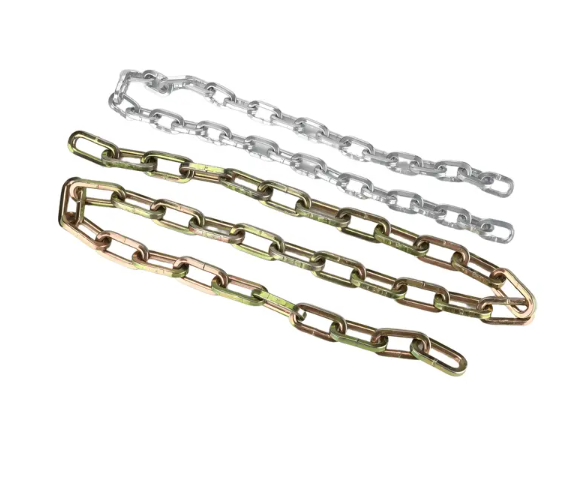
Choosing the right connector requires balancing convenience with ultimate security. The market offers several distinct styles for securing your load. We will compare slip hooks, clevis hooks, anchor shackles, and threaded quick links below.
Slip hooks are widely recognized across the towing industry. They offer incredibly fast hookup times for operators. They also remain universally compatible with most standard receiver hitches.
However, slip hooks carry specific risks. They utilize spring-loaded safety latches to secure the connection. These thin metal latches are prone to bending or rusting over time. If a latch fails, uneven terrain can bounce the hook completely off the receiver. You must inspect these springs regularly to prevent accidental detachment.
Clevis and grab hooks offer excellent high-security alternatives. They allow for precise length adjustments without twisting the metal links. You can safely lock a specific link into the grab hook notch.
The main risk involves limited articulation. They offer less rotational freedom than standard slip hooks. They also require exact sizing to function safely. If the hook notch does not perfectly match your link diameter, the connection becomes inherently unstable.
Anchor shackles provide supreme load-bearing capacity for heavy-duty applications. Their fully enclosed loop design completely prevents accidental decoupling. Once you secure the pin, the connection remains solidly locked in place.
The drawback is speed. They are much slower to connect and disconnect daily. You also face vibration risks. Road vibration can induce the threaded pin to back out slowly. You must inspect the pin routinely or secure it tightly to prevent loosening.
People commonly misuse threaded quick links in towing setups. You must adhere to a strict implementation warning here. Only use forged, stamped-WLL quick links in your towing configuration. Standard hardware-store links are typically cast or stamped steel without rated structural integrity. Unrated links will stretch and shatter instantly under dynamic shock loading.
Connector Style | Articulation Freedom | Connection Speed | Primary Vulnerability |
|---|---|---|---|
Slip Hook with Latch | High | Very Fast | Spring latch fatigue and rust |
Clevis Grab Hook | Medium | Fast | Mismatched link sizing |
Anchor Shackle | Low | Slow | Vibration-induced pin loosening |
Threaded Quick Link | High | Medium | Catastrophic failure if unrated |
How you route your setup is just as vital as the hardware you select. Proper geometry prevents catastrophic damage during a hitch failure. The industry strictly mandates a crossed routing configuration under the hitch tongue.
We cross the lines to create a physical cradle under the coupler. If the primary hitch disconnects, the crossed lines catch the falling tongue immediately. This cradle prevents the metal tongue from digging into the pavement. A dropped tongue hitting the highway at sixty miles per hour acts like a pole-vault. It can instantly flip the trailer and the tow vehicle. Crossing your connections eliminates this severe rollover risk entirely.
Running lines straight and parallel to the tongue creates a massive hazard. Parallel routing fails to control lateral sway during a tire blowout or disconnect. If the hitch drops, parallel lines allow the tongue to swing violently left and right. This lateral sway easily destabilizes the tow vehicle. It forces the driver to lose steering control almost immediately.
You must calibrate length and slack with extreme precision. We need enough slack to allow tight turning radii. If they pull tight during a sharp turn, they will bind and snap. However, you cannot allow them to drag on the road surface. Pavement dragging compromises metal integrity through aggressive abrasion. You should measure the optimal length by dropping the hitch and simulating a full turning arc in a safe environment.
Many operators face the problem of excessively long connections. They often resort to twisting the links together to reduce length and prevent road drag. We must examine the stark engineering reality behind this dangerous shortcut.
Engineers design towing hardware specifically for straight-line pulling. We call this tensile stress. Under tensile stress, the load distributes evenly across the entire curve of the metal. Twisting introduces severe torsional forces instead. Torsional forces twist the metal unnaturally.
When you twist a setup, you force the metal links to pinch tightly against each other. This pinching creates concentrated shear forces. It leads to premature stress fractures at a microscopic level. Twisting physically degrades the metal structure and drastically lowers the Working Load Limit. A twisted setup will fail well below its stamped capacity.
You must use compliant solutions for overly long setups. Twisting is never an acceptable fix. We recommend the following approved alternatives:
Utilize Grab Hooks: Install a load-rated clevis grab hook to safely bypass excess links. This keeps the load path linear and perfectly secure.
Permanent Modification: Have a certified rigging professional properly cut the excess length. They will remount the end connectors permanently using approved welding or bolting methods.
Chain Suspenders: Use heavy-duty rubber suspenders designed to lift slack securely without bearing the actual towing load.
The anchor points on your trailer frame endure the most stress during a disconnect. You must choose between welded and bolted anchoring systems. Each approach offers distinct engineering benefits and maintenance drawbacks.
Many heavy-duty trailers utilize permanently welded frame anchors. They offer clear benefits for commercial hauling.
Benefits: Welding creates a permanent, zero-rattle connection. It provides exceptionally high structural integrity when performed by a certified professional. It handles immense static weight effortlessly.
Drawbacks: The bottom loops eventually wear out from constant use and ground contact. Replacing a welded anchor requires extensive grinding and re-welding. Poor welding technique creates Heat-Affected Zones (HAZ). These weakened metal zones fail catastrophically under sudden shock loading.
Bolted attachments provide a versatile alternative to permanent welds. They appeal to fleet operators who prioritize rapid field maintenance.
Benefits: Bolted setups allow for modular replacement. You can swap out a damaged security chain in mere minutes. It eliminates the need for expensive welding equipment.
Drawbacks: Bolted anchors demand strict adherence to manufacturer torque specs. You must use SAE Grade 8 hardware exclusively. You also must install locking nuts or heavy lock washers. Road vibration will violently shake a standard nut loose over time.
You cannot assume your current hardware meets safety standards blindly. We highly recommend auditing your entire towing configuration regularly. Follow this strict evaluation framework to guarantee highway safety.
Match Component Ratings: Verify every stamped WLL on your hitch receiver, connectors, and anchors. Ensure these numbers meet or strictly exceed your trailer's maximum GVWR. Replace any component missing a clear, legible stamp.
Inspect for Wear: Establish strict criteria for replacement. You must measure link thickness with digital calipers. Replace any link worn by more than 10% of its original factory diameter. Discard any hooks showing visible stretching or bending.
Test Articulation: Hook up your trailer in a controlled, off-highway environment. Cross the links properly under the tongue. Perform a maximum tight turn test in both directions. Ensure you experience zero binding and zero road drag throughout the entire arc.
Optimal trailer towing performance is never just about the raw thickness of the metal. It relies heavily on proper attachment geometry, verified connector ratings, and strict adherence to structural best practices. We have seen that the weakest link principle governs your entire system. Dynamic shock loads easily shatter unrated equipment.
Audit your current trailer hardware immediately to ensure WLL compliance.
Upgrade from basic S-hooks or unrated quick links to certified clevis hooks or load-rated shackles.
Verify your routing strategy guarantees a protective cradle effect.
Never twist your links to shorten them; use an approved grab hook method instead.
Taking these actionable steps today protects your cargo, your vehicle, and your legal liability before your next long haul.
A: While specific traffic laws vary by jurisdiction, DOT guidelines broadly state that your hardware must not be compromised in strength. Twisting physically degrades the load capacity of the metal by introducing torsional stress. This makes it a major safety hazard and legitimate grounds for a citation during a roadside commercial inspection.
A: Color-coding often indicates a specific strength class, such as Grade 70 or 80, intended for overhead lifting or heavy transport. However, paint alone is never proof of capacity. You must always look for the physical WLL stamp permanently forged into the metal to verify its true strength rating.
A: No. Padlocks are designed strictly for static theft deterrence, not dynamic load bearing. A padlock will stretch and shatter instantly under the severe shock load of a sudden trailer disconnect at highway speeds. You must only use forged, load-rated towing connectors.
A: You must leave exactly enough slack to permit the maximum turning angle of the tow vehicle without pulling the lines tight. However, the slack must remain short enough so they never drag on the ground. Dragging causes severe abrasion that ruins the metal.
A: Unlike standard bumper-pull setups, gooseneck trailers generally require straight routing. The connections drop vertically into the truck bed anchor points rather than crossing under a rear hitch. You should always refer to your specific hitch manufacturer's guidelines to ensure proper vertical routing.


